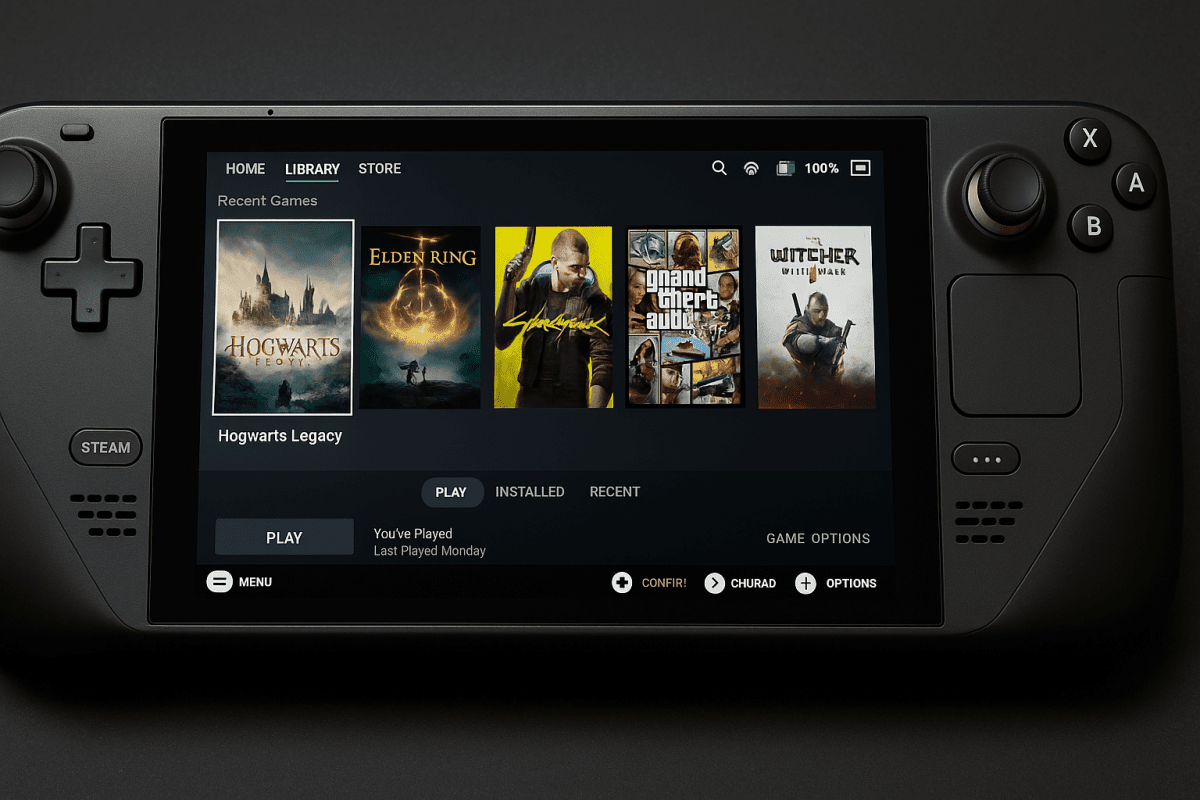
Steam Deck Models Compared: LCD vs OLED
Valve’s Steam Deck is a favorite among handheld gaming fans, and with the OLED model now available, picking the right version matters more than ever. Here’s a quick comparison of the Steam Deck LCD and OLED models.
| Feature | Steam Deck LCD | Steam Deck OLED |
|---|---|---|
| Display | 7.0-inch LCD | 7.4-inch OLED |
| Refresh Rate | 60 Hz | 90 Hz |
| Battery Life | Up to 7 hours | Up to 10 hours |
| Weight | 649 grams | 669 grams |
| Storage | 256 GB | 512 GB / 1 TB |
| Price (USD) | $399 | $549 (512GB), $649 (1TB) |
Display and Visuals
The OLED model features a larger, more vibrant 7.4-inch OLED screen, delivering deeper blacks and richer colors than the 7.0-inch LCD on the standard model. This is especially noticeable in games with vivid environments or dark scenes.
Performance and Battery
Both models use the same AMD APU with a Zen 2 CPU and RDNA 2 GPU, so gaming performance is similar. However, the OLED model offers a higher 90 Hz refresh rate for smoother gameplay and up to 10 hours of battery life-about three hours more than the LCD model.
Design and Storage
The OLED is a bit heavier but still comfortable to hold. It comes with larger storage options (512 GB or 1 TB), while the LCD model is limited to 256 GB.
Price
The LCD model is the most budget-friendly at $399, while the OLED models are priced at $549 (512 GB) and $649 (1 TB).
Which Steam Deck Should You Buy?
- Choose the LCD model if you want the most affordable entry into handheld PC gaming and don’t mind a standard display.
- Choose the OLED model if you want the best screen, longer battery life, and more storage. The OLED is the more refined and future-proof option, especially for those who value visuals and extended play sessions.
Both models deliver the same core gaming experience, but the OLED’s upgrades make it the superior choice for most users willing to pay a bit more. If price is your main concern, the LCD still offers excellent value.